Saturday, October 30, 2021

Book Review - 50 World's Greatest Horror Stories


Well, this isn't the kind of book that will keep you awake at night or make you squirm uncomfortably before stepping inside a dark room. The horror tales in this book are all, written by authors of yore, full of thrill, shock, pathos and, sometimes, fear inducing. Not exactly the kind of fear that will send a chill down your spine, but the kind of fear that could shake your heart. It also evokes a sense of pain that would make you wish you could step inside the story and do something to prevent the characters do that stupid thing that will unleash evil upon them!

After quite a while, I was able to complete a 400+ pages book well inside a week's time. Thanks to all these classic tales, which are intriguing and unique in their own sense! A good read, indeed!

Monday, October 11, 2021

Book Review - India: The Eternal Magic, Antara Dev Sen


What could have been a wonderful book is marred by a glaring factual error on South Indian history. While writing about the famous Chola kings of Tamilnadu, the author mentions that Rajaraja Chola went on a military expedition till the Ganges. Any historian worth his/her salt would know that it was his son Rajendra Chola that went on a military expedition till the Ganges and formed a city to celebrate that victory.

If you can forgive that unforgivable mistake, the rest of the book is a pleasant read. Filled with a brief introduction to Indian history, the book offers a bird's eye view of the subcontinent - its geography, culture, tourist spots, etc. Has a good compilation of photographs too, making it a good addition to my coffee-table books collection. 3.5 stars!

Sunday, October 10, 2021

Book Review - #Tatastories: 40 Timeless Tales to Inspire You, Harish Bhat

Couple of months ago, when a central minister lashed out at big business houses, training his guns particularly on Tata Group, his rant elicited collective consternation in social circles. The reason - he blamed the Tata group for working ‘against national interests’, stopping just short of terming Tata Group as ‘anti-national’ - a term used freely these days against anyone that doesn’t toe the ruling party’s lines. When the news of his silly talk came out, it is not just corporate houses that condemned the speech. Even ordinary citizens like Yours Truly felt a sense of indignation at his outburst against the Tatas. After all, very few companies across the globe cater to the needs of people across the economic spectrum – from basic table salt to high-end luxury cars – with the kind of integrity and dedication that is the hallmark of Tata.

Not sure whether it was due to that news still being fresh in my mind, or due to seeing the lone copy of this beautifully covered book sitting cosily in the corner shelf at Crossword, I bought this book within a minute of seeing it. It was a gamble I took – of judging a book by its cover – but as always, the Tatas didn’t disappoint.

The name Tata needs little introduction. A credible conglomerate more than a century and a half old, having diverse business interests that range from table salt to tea dust, IT to automobiles, steel to luxury retail, aviation to infrastructure, Tata is a brand that people trust with their wallets and wisdom. Despite being in the business world for so long, there were seldom any scandals or scams that got associated with this reputable institution, which is why most people were surprised at the minister’s outburst.

Written as a genuine tribute by one of their longest-serving employees, the ‘stories’ are all pearls of wisdom that can inspire you to action. The book is written in glowing terms for the Tatas, but I don’t see why it shouldn’t have been. For the sake of ease, let me simplify the achievements of Tatas:

•    Tatas hold the no. 1 position in commercial vehicles market with a market share of more than 50%. But never once did they manipulate the prices or exploit the customers.
•    They designed and manufactured what is considered to be one of India’s indigenously developed passenger cars – Indica.
•    Conceived and established India’s first integrated steel plant in Jamshedpur, when India was still under British oppression.
•    When HMT was the only Indian watch brand, facing competition from global giants like Casio, Citizen and Seiko, they introduced Titan, which has gone on to become a household name.
•    One of the few companies that truly cares for employee welfare, establishing creches for working women’s benefit, way back in 1870s!
•    Established and maintained an institute for sericulture in India, which went to dust soon after Tatas shifted their focus away from it.
•    Built a dam on Indrayani river (Maharashtra) to produce electricity for Mumbai.
•    Formed and operated India’s first commercial airline service.
•    Produced India’s first supercomputer – Eka
•    Established institutions like Tata Institute of Fundamental Research, Tata Memorial Hospital, National Centre for Performing Arts and National Institute of Advanced Studies, that provide yeomanly service to the people in areas of academics, arts and healthcare. Tatas’ care for environment is also legendary.

Though there are more such things that I can list here, for the sake of brevity, let me hold myself back. When a company withstands the test of Time and the tyranny of British, still serving the people of its country in ethical ways, it is bound to garner respect and reputation, which any foul-mouthed politician cannot do away by careless prattle.

If you’re keen on learning about the Tatas, their early days and ethos, this is a good book to begin with. Along the way, you will pick up some timeless wisdom that can be of use in both personal and professional lives.

Call it irony, coincidence or mere motivated perception, I finished reading this book on a day when the news of Tatas acquiring Air India back from the government was making rounds. The airline that was formed and operated by Tatas with excellence, taken over by the government once the nation became independent, ruined by incapable handling and inept ministries, now limping back home with hopes of a healthy overhaul and soaring back to the skies in superior condition.

Like always, I trust the Tatas to work their magic once again!

A.

Saturday, August 14, 2021

Movie Review - Sarpatta Parambarai


பொதுவாக இந்திய திரைப்படங்களை விட ஆங்கிலப் படங்களே நான் அதிகம் காண்பது வழக்கம். காதல் என்ற பெயரில் காமத்தையும், ஆக்ரோஷம் என்ற பெயரில் அபத்தமான கோமாளித்தனங்களையும் மட்டுமே காட்டி வருவதாலேயே பெரும்பாலான படங்களின் சுவரொட்டிகளைக் கண்டால் கூட ஒரு வெறுப்புதான்  தோன்றும் எனக்கு. அதற்காக நான் ஏதோ அறிவுஜீவி என்று என்னை நினைத்துக் கொண்டிருப்பதாக நீங்கள் எண்ண வேண்டாம். ஏனென்றால் எனக்கும் தெரியும் நான் அப்படி ஒன்றும் அறிவுடைய ரசிகனும் அல்ல. ஆங்கிலப் படங்களில் கூட அடிதடி அதிகமான 'action' வகை படங்களே நான் அதிகம் காண விரும்புபவை.

ஆனால் சமீப காலமாக, ஒவ்வொரு மொழியிலும் உள்ள நல்ல படங்களைத் தேடித் தேடி நான் பார்க்கத் தொடங்கியிருக்கிறேன். அந்த முறையில், அண்மையில் ஒரு நண்பர்  Facebook-ல் 'சார்ப்பட்டா பரம்பரை' படத்தில் இருந்து ஒரு காட்சியை பகிர்ந்திருந்ததைக் கண்டேன் . சில நிமிடங்களே ஆன அந்த ஒரு காட்சியிலேயே ஒரு உத்வேகமும் விறுவிறுப்பும் நிறைந்திருந்ததை என்னால் உணர முடிந்தது. ஒரு ஆவலோடு அந்தப் படத்தைப் பார்க்க ஆரம்பித்தேன். படம் தொடங்கிய சில நிமிடங்களிலேயே, இது ஒரு வழக்கமான படமல்ல என்பது மட்டும் எனக்கு நிச்சயமானது.

ஏகலைவனுக்கும், துரோணருக்குமானது போல ஒரு பந்தம் ஏழை கபிலனுக்கும், குத்துச்சண்டை வாத்தியார் ரங்கனுக்கும். ஆனால் இந்த வாத்தியார் துரோணரைப் போல அயோக்கியத்தனமாக  கட்டை விரலை வெட்டித்தர சொல்பவரில்லை. கபிலனின் தந்தை பெரிய குத்துச்சண்டை வீரனாய் இருந்து கடைசியில் ரௌடி ஆகி இறந்தது போல கபிலனும் ஆகி விடக்கூடாது என்ற ஒரு நல்ல எண்ணமும் அவர் கபிலனை ஒதுக்கி வைக்க ஒரு காரணம். ஆனால் ஒரு முக்கியமான குத்துச்சண்டை போட்டியின் போது ரங்கனின் சார்ப்பட்டா பரம்பரை வீரர், எதிரணியான இடியாப்பப் பரம்பரை அணியின் முக்கிய வீரரிடம் தோற்றுப் போக, பழைய பகை காரணமாக ரங்கன் அவமதிக்கப்படுகிறார். அது கண்டு பொறுக்க முடியாமல் கபிலன் போன்ற ரங்கனின் விஸ்வாசமான சீடர்களும், அணியினரும் ஒரு இறுதி போட்டிக்கு சவால் செய்கின்றனர். சந்தர்ப்பங்களும் சூழலும் சார்ப்பட்டா பரம்பரை சார்பில், இதுவரை மேடையே ஏறாத, யாராலும் பெரிதாக எண்ணப்படாத கபிலனை, இடியாப்பப் பரம்பரையின் இரண்டு முக்கியமான வீரர்களுக்கு எதிராக களம் காண வைக்கின்றன. கபிலன் வென்றானா? ரங்கன் வாத்தியாரின் மானம் மீண்டதா என்பது தான் மொத்தப் படத்தின் கதை. இதனூடே, 1970களில் ஏற்பட்ட அரசியல் மாற்றங்களும், அந்தக் காலங்களில் தலைவிரித்தாடிய சாதீயக் கொடுமைகளும் சேர்த்துப் பின்னப்பட்ட  ஒரு அழகான கதைதான் இந்த 'சார்ப்பட்டா பரம்பரை'.

தமிழ் சினிமா நிறைய நடிகர், நடிகைகளை சரியாக பயன்படுத்திக் கொள்ளாமல் வீணடித்தது வரலாறு. அந்த வரிசையில் பசுபதி நிச்சயம் இடம் பெறுவார். ஒரு திறமைவாய்ந்த நடிகனை, வெறுமே வில்லனாகவும், துணை நடிகராகவும் மட்டுமே பயன்படுத்தி  முடக்கி வைத்தது என்ன ஒரு கயமைத்தனம்! வடசென்னையின் பேச்சுவழக்கும், வாழ்க்கையின் அனுபவங்கள் பல நிறைந்த ஒரு முதிர்ச்சியும் காட்டி, பசுபதி இங்கு ரங்கன் வாத்தியாராகவே வாழ்ந்திருக்கிறார். அடுத்தது ஆர்யா. ஏற்கனவே 'நான் கடவுள்' படத்திலேயே அவர் தனது  திறமைக்கு ஒரு  கோடிட்டுக் காட்டியிருந்தாலும் அதன் பின் வந்த பல படங்கள் வெறும் கணக்குக்கும் காசுக்கும் மட்டுமே ஆனவை. ஆனால் ஆர்யா இந்தப் படத்தில் திரை முழுக்க நிரம்பியிருக்கிறார். கலையரசன், சந்தோஷ், ஜான் விஜய், ஷபீர், அனுபமா, ஜான் கொக்கன், துஷாரா என்று பல நடிகர்களும் தம் பாத்திரங்களைக் கச்சிதமாக செய்திருந்தாலும், படம் பயணிப்பது முழுக்க பசுபதி மற்றும் ஆர்யா தோள்களில் தான்.

படத்தினூடே இயக்குனர் தனக்கே உரித்தான பாணியில் அம்பேத்கர் சுவரொட்டிகளையும், புத்தர் சிலைகளையும், மற்றும் பல சாதி அடையாளங்களையும் புகுத்தியிருப்பது நிறைய பேருக்கு நெருடலைத் தரலாம். ஆனால் இந்தக் கதை வெறும் குத்துச்சண்டை போட்டியை மட்டுமே காட்டுவதற்கில்லை. அந்தக் காலகட்டங்களில் தலைவிரித்தாடிய சாதிப் பிரச்சனை பற்றிக் கூடத்தான். எனக்கே கூட சமயங்களில் இவர் ஏன் இன்னும் 'கீழ் சாதி - மேல் சாதி' என்று ஆறத் தொடங்கியிருக்கும் ரணங்களை நோண்டி எடுத்துக் காட்டிக் கொண்டிருக்கிறார் என்று சமயத்தில் ஒரு கோபம் வரும். ஆனால் அப்போதெல்லாம் 'நீ மலம் அள்ளவும், பிணம் புதைக்கவும், தோல் தைக்கவும், அழுக்கும் குப்பையும் சுத்தம் செய்யவும் மட்டுமே படைக்கப் பட்ட இழிபிறப்பு. நீ சக மனிதப் பிறவியாக மதிக்கப் படக் கூட லாயக்கில்லை' என்று சொல்லிச் சொல்லி, பல தலைமுறைகளாக செருப்பும் சட்டையும் கூட அணிய அனுமதிக்கப்படாமல், விடிவு வரும் என்று நம்பி வாழ்ந்து இருட்டிலேயே இறந்து போன நம் சக மனிதர்களின் தேற்றப் படாத அழுகைகளும், ஆற்றப்படாத கோபங்களும் ஒரு நொடி கண்முன் வந்து என்னை தலை குனிய வைக்கின்றன. இன்னும் கூட, இந்த அறிவுசார் தமிழ் மண்ணில் 'தாழ்த்தப்பட்டோர்' என்று சொல்லி நம் சக மனிதர்களுக்கு கோவிலுக்குள் செல்ல அனுமதி மறுக்கப்படும் கொடுமைகள் நடந்துகொண்டு இருப்பதைக் கண்டால், இயக்குனர் இது போல இன்னும் ஓரிரு திரைப்படங்களாவது எடுக்க வேண்டும் என்று தான் தோன்றுகிறது.

வேகத்திலும், ஆக்ரோஷத்திலும் இந்தப் படம் 'Rocky' வரிசைப் படங்களுக்கு இணையென்று சொன்னால் அது மிகைப்படுத்தல் ஆகாது. ஒன்றுக்கு இரண்டு முறை பார்க்கக்கூடிய படம் இந்த 'சார்ப்பட்டா பரம்பரை'!    

AK
             

Saturday, July 17, 2021

Book Review – City of Djinns, William Dalrymple

My septuagenarian father-in-law has the heart of a wanderer. So much so that when he first visited my hometown, he used his habitual morning walks to explore various parts of the locality. Like most Indians of his generation, he had never stepped out of his home state till then. So, when he visited the southern part of the country for the first time, he was excited by all the sights he witnessed – cows being milked on the streets, women adorning front yards with rangolis, temples and mosques opening in those wee hours for early morning prayers, restaurants offering fresh filter coffee, etc. Even now, years after that visit, he fondly recalls all those sights and speaks glowingly about the ancient traditions prevailing in my hometown.

I often compare myself with him – a man of his age preferring to explore by walking around, in places he doesn’t know, amidst people that speak languages he doesn’t understand. Myself on the other hand, young and with energy, a polyglot to boot, preferring to use private vehicles or book taxis to move around in new places, going from one point to another, seldom stopping to breathe in all that is new and peculiar about that place. He is a traveler by heart, while I am an ordinary tourist, a stranger even in my own place, never having wavered from routes that took me to my college or office, never having seen a major part of my own hometown!

The world, luckily for moored mortals like me, is filled with travelers like my father-in-law, people that step into the streets, take in all that smell and sights, get acquainted with the local customs and culture, be a part of the milieu and become one with it. Many such travelers have been able writers too, who could soulfully share their experiences so that people like me could feel a vicarious pleasure. William Dalrymple is one such traveler, an able historian and an interesting writer, full of anecdotes and cutting wit. When he writes a book about his first visit to Delhi, a city with a history that is as old as one of India’s greatest epics, if not more, you can expect it to be a great treat. And, a delight this turned out to be!

First published in 1993, during a period when India was soaking up the effects of globalization and privatization, the book recounts Mr. Dalrymple’s arrival in India for the first time, along with his wife, and stay for about a year before his return to his homeland for a brief visit. The book contains two strands. One strand follows Mr. Dalrymple’s arrival, his experience with the prevailing bureaucracy, the quirks of Indians stuck in the transition from the so-far cloistered Indian society, marked by the docile Doordarshan, to the ‘liberal’ Western culture, epitomized by half-clad VJs of MTVs and V Channels. The strand is made colorful by the presence of some interesting characters. His flirtatious landlord and the mildly-grumpy-often-friendly landlady, Mr. and Mrs. Puri, Balvinder Singh the boisterous taxi driver and the ageing Islamic scholar Dr. Jaffery are some of the characters that add vibrant hues to this strand as it moves forward.

The other strand travels in the opposite direction, drawing concentric circles in the sands of Time, tracing the history of Delhi backwards, starting from the British Raj and its gory legacy – the Partition of India. Moving backwards in time and moving across a few miles from the lush lawns of New Delhi to the dusty lanes of old Delhi, the second strand takes on hues of blood and tears, beauty and betrayal, vices and virtues. Detailing the now-fascinating, now-revolting Mughal history, describing the early days of sultanates, talking about the little-known Hindu kings like Anangpal Tomar, the book makes an ambitious effort at going all the way up to the pre-historic days of Indraprastha, the famed city of Pandavas, which stood in or around the area where modern Delhi now stands.

While the strand that moves ahead in time is full of trademark wit and sarcasm, eliciting chuckles often, the strand moving backwards lends a sense of pathos. The glory of old Delhi, its current decay, the yearning for those days of regal grandeur, the revulsion one feels at the fratricides and parricides that stained Mughal history, the pride for some of the greatest monuments that adorn Delhi’s landscape, the helplessness with which we bid adieu to that glorious past that is being irretrievably lost – this book will take you on an emotional roller coaster.

Interweaving these two strands, Mr. Dalrymple has produced a tapestry full of life and longing. As colorful as Delhi’s history, this is a must read for anyone in love with India, its heritage and history. Man, I felt a sigh and a tinge of sadness as I closed the book and kept it aside!


A.

Wednesday, June 30, 2021

Minding the Mistakes

It was a typical Sunday dawn, showing all the hints of languor and leisure. I was just snuggling into the couch with a cup of steaming hot tea, listening to the voice of Ronkini Gupta flowing through my music player. Outside my window, the Mumbai skyline looked sombre, the early dawn drizzle drenching everything and the gathered clouds presenting a foggy appearance. Pampered by thoughts of a long day of leisure ahead, I took a sip from my cup.

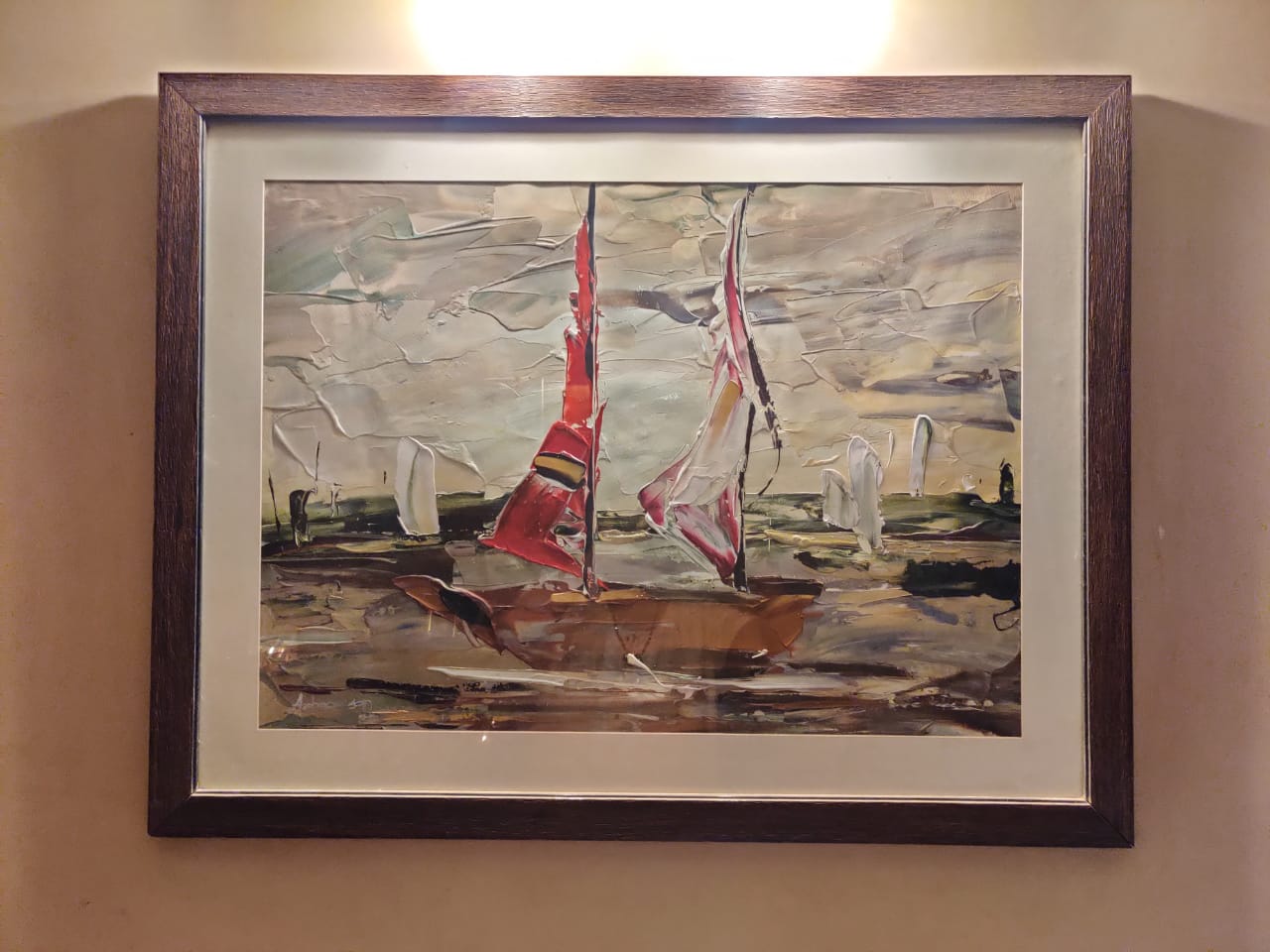
Turning inside, my half-awake eyes fell on the wall in front. Hanging there was an impasto work, done by applying thick layers of paint in vibrant strokes. The painting portrayed a brown sail boat gliding through the choppy sea. On the background, there were a few more boats with billowing white sails. The pastel shades of mauve, green and grey produced a sky that was much similar to the one outside my window – glum and overcast.

Ever a sucker for anything artistic, I felt a strange pull about the painting, despite having seen it umpteen times already. For all my interest and curiosity, it wasn’t even a realistic work that faithfully brings the scenery before your eyes. There wasn’t single fine line anywhere in the painting, nor was a stretch of same colour. Turbulent waves, blowing winds, swathes of greenery on the seashore and even a hint of a lighthouse – these were all produced with spontaneous strokes. Looking at the painting, I could feel the artist, creative energy pulsating through his veins, flourishing his palette knife across the thick cartridge paper, applying a medley of hues all tangled together, in a show of energy and enthusiasm for his craft.

Looking closely, I found erratic lines, uneven edges and specks of colours that had dripped unexpectedly, all across the landscape. All these could have marred paintings of a formal kind. But here these same things lent a curious charm to the work. The artist seemed to have completed this painting in a single sitting. There was no trace of correction anywhere in the work. There was no application of paint one atop the other, for correction, except the necessary layering of the sky and the sea. That spontaneity is what made the painting unique and special.

My mind turned towards my own amateurish paintings. Ever the one bent on perfection, I work meticulously, trying to correct every line and every layer of paint. Eager to produce the straightest of lines, most perfect of curves and neatest of colours, I end up messing my works by overdoing things. I draw and then redraw the lines. If there is a slightest spot in the canvas where the colour hasn’t reached properly, I apply paint all over again. If a stroke appears to have some uneven edges caused by the odd bristle, I try to hide it by adding another coat of paint there. All such things, while satisfying my quest for perfection, leave a not so aesthetic effect on the final work. Is that my lack of confidence or my excess concern for the perfection of my works, I had never understood. At least not until that morning.

While I was toying around with such thoughts, I found a simile with our own lives and our mistakes too. We all commit mistakes in our lives, most of them unintended and out of ignorance. But how often do we create a bigger mess, trying to ‘correct’ those mistakes! While a simple acceptance of our fault and a sincere apology could set matters straight, we insist on laying upon our mistake layers of excuses and explanation. We try to justify why we did things the way we did. We try to add a veneer of good intentions atop our bad behaviour. End result? Our mistakes assume a greater magnitude for the worse and leave all the parties involved in a poor state of mind.

So, next time I pick up a brush or perform a deed, which results in an unintended mistake, I will try to accept it, apologize and move on, instead of trying to gloss over it with excuses, silly amends and senseless justifications. End of the day, acceptance of such imperfections is what makes human lives unique and beautiful. Not all of us are Michelangelo’s ‘David’, polished and unblemished. But we can all be the clay works from the hands of a skilled artisan – each unlike the others, imperfect with uneven edges and yet, each beautiful in their own unique imperfections!


A.

Tuesday, June 22, 2021

Book Review – Mr. Sampath: The Printer of Malgudi, R.K. Narayan


There is this special quality about the books of R.K. Narayan – each and every one of them feel like a journey. The initial enthusiasm before commencing one, the excitement once it is started, witnessing fresh and familiar scenery, meeting new characters, the lull of the monotony one slips into after a while, the subtle boredom that creeps in and makes one look forward to closure, the stir one feels as one nears the end, and the happy arrival at the destination – these are all emotions that one feels during the journey as well as while reading the works of R.K. Narayan.

There is no denying the fact that RKN is one of the geniuses to have graced the world of Indian literature. Imagine the fecundity that pervaded his mind and brought forth an entire town in fiction, which went on to serve as a beautiful backdrop for almost all his works. Apart from the town, his way of writing - capturing those Independence era habits and societal customs for posterity to relish - is another mark of his genius. The old-world charm of the pre-technology days flows out of these pages, sending the reader’s mind into a serene journey into that halcyon past.

‘Mr. Sampath’ is no exception, though this may not be the best of Mr. Narayan’s works. Srinivas arrives in Malgudi, trying to find his life’s purpose by venting out his thoughts through a journal, ‘The Banner’. As he stands almost on the verge of giving up the idea, with no printer forthcoming to print ‘The Banner’, Sampath the printer arrives in his life as a god-sent ray of hope. Leaving just the writing part to Srinivas, Sampath takes it upon himself to run the nitty-gritties of the journal. All seems to go well for Srinivas, when one day, without any warning, the printer shuts shop due to labour trouble. The resourceful Sampath quickly gets into a film production company, roping in Srinivas as the script writer. But all that glitz and glam of life under spotlights slowly gets into the head of Sampath. What transpired in the end forms the rest of the tale.

All the qualities mentioned in the first stanza are present in this book too, except the stir towards the end and the happy arrival – a meaningful closure. Normally Narayan’s novels end leaving one mystified and even pensive about some of the higher truths. Not this one. The end of the tale neither satisfies the reader nor makes much sense. It feels as if you started the journey hoping to arrive at a faraway, beautiful destination, but were yanked out midway through the journey, to be left behind on a barren, no-man’s land.

An OK read from RKN!

A.

Book Review — Be More Bonsai, Mark Akins

During my school days a magician visited our school and taught us the art of Origami. Creating lively shapes out of plain notebook papers, h...